Netflix to buy Warner Bros film and streaming businesses for $72bn
 Getty Images
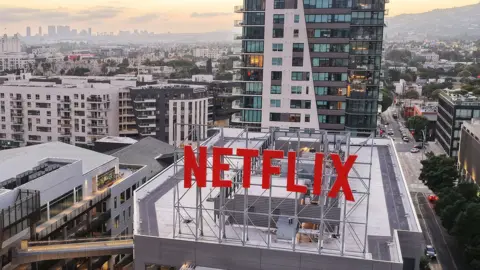
Netflix has agreed to buy the film and streaming businesses of Warner Bros Discovery for $72bn (£54bn).
The streaming giant had emerged as the top bidder for Warner Bros ahead of rivals Comcast and Paramount Skydance after drawn-out battle.
Warner Bros owns franchises including Harry Potter and Game of Thrones, and the streaming service HBO Max.
The takeover is set to lead to a radical reshaping of the US film and media industry, but analysts have warned that it could face resistance from competition authorities.
The cash and stock deal is worth $27.75 per Warner Bros share, with a total enterprise value of about $82.7bn.
Netflix co-chief executive Ted Sarandos said that by combining the Warner Bros library of show and movies with the streaming platform, “we can give audiences more of what they love and help define the next century of storytelling”.
Netflix’s other co-chief executive, Greg Peters, said the deal meant Netflix could introduce Warner Bros products to a broader audience.
David Zaslav, president and chief executive of Warner Bros, said the announcement “combines two of the greatest storytelling companies in the world”.
“By coming together with Netflix, we will ensure people everywhere will continue to enjoy the world’s most resonant stories for generations to come,” he said.
Paramount had made an initial bid to buy the whole company, including its cable networks such as CNN, in October. Warner Bros rejected this move before putting itself up for sale.
There had been widespread reports that Netflix had established as the frontrunner for Warner Bros, but ahead of the announcement Emma Wall, chief investment strategist at Hargreaves Lansdown, said the US competition regulator was likely to get involved whoever the winner was.
“This will create a global mega power in broadcast entertainment which the regulator will want to look at,” she said.
Tom Harrington, head of television at Enders Analysis, said it was hard to gauge whether the deal would win regulatory approval, but if it went through it would have a massive impact on cinema.
“Were it to go through it would reorient Hollywood, with a streamer acquiring a business much of which it is existentially the antithesis of – Netflix has always had some limited use for the cinema but generally its offering undermines it,” he said.
Mr Harrington said there was likely to be “big reductions” in television and film output from a merged entity, which would lead to resistance to the move from parts of Hollywood and relevant unions.
“HBO, the creative jewel, would be terribly exposed within Netflix, although it has survived difficult owners for a lot of its existence,” he said.
For consumers, Mr Harrington said a merger was likely to lead to higher costs.
“Netflix would get more expensive and even though HBO Max would be shuttered/become non-essential, the greater penetration of Netflix households would likely mean an increase in total overall subscription revenues.”