
Trump Administration Live Updates: Mass Layoffs Announced at Health and Human Services Dept.

Where Things Stand
-
Federal layoffs: The Trump administration on Thursday announced that 10,000 employees of the Health and Human Services Department would be dismissed, as part of a major reorganization designed by Health Secretary Robert F. Kennedy Jr. The layoffs are a drastic reduction in personnel for the health department, which now employs about 80,000 people. Read more ›
-
Trade war: President Trump threatened to impose heavier tariffs on Canada and the European Union if they work together to “do economic harm” to the United States, hours after he said he would impose 25 percent tariffs on imported cars and car parts. The planned tariffs, which sent shares in global automakers sharply lower, will likely have damaging effects on the economies of the United States’ North American neighbors and two of its key allies in Asia.
-
Security breach: Attorney General Pam Bondi said that information about a pending military operation in Yemen mistakenly shared with a journalist in a Signal group chat was sensitive but “not classified.” National security veterans have said similar details are the type of information that is meant to be classified. Bondi’s declaration suggests there will be no criminal investigation into the extraordinary security breach.

The Trump administration on Thursday announced a massive layoff of 10,000 employees at the Health and Human Services Department, as part of a dramatic reorganization designed to bring communications and other functions directly under the purview of Health Secretary Robert F. Kennedy Jr.
The layoffs, reported earlier by The Wall Street Journal, are a drastic reduction in personnel for the health department, which now employs about 82,000 people. Together with previous layoffs, the move will bring the department down to about 62,000, the agency said.
The restructuring will include creating a new division called the Administration for a Healthy America, which Mr. Kennedy said will go by the acronym A.H.A. “We’re going to do more with less,” he said, even as he acknowledged it would be “a painful period for H.H.S.”
The 28 divisions of the health agency will be consolidated into 15 new divisions, according to a statement issued by the department. Mr. Kennedy announced the changes in a YouTube video.
Mr. Kennedy’s department touches the lives of every American. Through its various agencies — including the Centers for Disease Control and Prevention, the Food and Drug Administration and the National Institutes of Health — it regulates drugs, monitors food safety, tracks infectious disease and conducts biomedical research.
All of those agencies have campuses outside of Washington and tend to operate under their own authority, and Mr. Kennedy has been at odds with all of them. Mr. Kennedy assailed them, and other parts of the department, in his video.
“When I arrived, I found that over half of our employees don’t even come to work,” he claimed. “H.H.S. has more than 100 communications offices and more than 40 I.T. departments and dozens of procurement offices and nine H.R. departments. In many cases, they don’t even talk to each other. They’re mainly operating in the silos.”
Advertisement

Attorney General Pam Bondi declared Thursday that information about a pending military operation in Yemen that was mistakenly shared with a journalist in a Signal group chat was “not classified.” Speaking at a news conference, Bondi said: “It was sensitive information, not classified, and inadvertently released.” She added: “If you want to talk about classified information, talk about what was in Hillary Clinton’s home.” National security veterans have previously said the details of a pending military operation, such as those sent to the group chat by Defense Secretary Pete Hegseth, match the type of information that is meant to be classified.
The declaration, coming from the nation’s top law enforcement official, suggests there will be no criminal investigation of the pending attack plans that Hegseth shared in the Signal chat group.
The Trump administration will announce a massive layoff today of 10,000 employees at the Department of Health and Human Services, as part of a dramatic reorganization designed by Health Secretary Robert F. Kennedy Jr., according to a White House official. The layoffs, first reported by The Wall Street Journal, amount to a drastic reduction in personnel for the health department, which now employs about 80,000 people.
The Journal also reported that the reorganization would bring communications and other functions across the department’s various agencies directly under Kennedy’s authority. Those agencies include the Centers for Disease Control and Prevention, the Food and Drug Administration and the National Institutes of Health, which all have campuses outside of Washington and tend to operate under their own authority.

The new auto tariffs “send a disastrous signal for free, rules-based trade,” Hildegard Müller, president of the German automobile industry association, said today. The association, whose members include Volkswagen, BMW and Mercedes-Benz, called for urgent talks to discuss a deal between the United States and Europe.

Shares in automakers around the world wobbled on Thursday after President Trump announced plans to impose a 25 percent tariff on imported cars and some parts beginning next week.
The stocks of major Detroit carmakers, which build some of their vehicles in Canada and Mexico, were rattled in early trading. Shares in General Motors, which imports many of its best-selling cars and trucks from Mexico, opened down more than 7 percent. Ford, which is less reliant on imported cars, fell about half a percent.
The S&P 500 index opened roughly 0.4 percent lower, after a loss of more than 1 percent on Wednesday.
Shares in Tesla, which is expected to suffer less from tariffs than its competitors because it makes all the cars that it sells in the United States in California and Texas, rose about 1 percent. Mr. Trump said Wednesday that Elon Musk, Tesla’s chief executive who has taken a leading role in the White House, had not influenced his decision to impose tariffs.
Among the hardest hit shares on Thursday were carmakers based in Germany, Japan and South Korea, which sell many of their cars in the United States and rely on complex supply chains that cross borders, including from production sites in Mexico and Canada.
Shares in Germany’s Volkswagen, Europe’s largest automaker, fell 2 percent. Other German carmakers like Mercedes-Benz and BMW dropped 2 to 4 percent in European trading.
Stellantis, the parent of Chrysler, Fiat, Jeep, Peugeot and Ram, saw its European shares fall nearly 5 percent.
The stocks of Japan’s Toyota Motor, Honda Motor and Nissan Motor all fell about 2 percent in Tokyo. Shares in South Korea’s Hyundai Motor and Kia fell 3 to 5 percent in Seoul.
Shares in India’s Tata Motors slumped nearly 6 percent. The company owns the British company Jaguar Land Rover, which imports all of the luxury cars it sells in the United States. Germany’s Porsche, whose stock dropped 4 percent, also imports all of the cars it sells in America.
Nearly half of all vehicles sold in the United States are imported, as well as nearly 60 percent of the parts in vehicles assembled there. For many foreign carmakers, the United States is a critical market: Nearly one of every three Porsches, and one of every six BMWs, is shipped there. German companies also export about $8 billion in car parts to the United States.
“Since all countries in the world are affected, it is likely to be difficult for countries like Germany to redirect cars to third countries and sell them there,” analysts at Commerzbank wrote in a note.
BMW warned this month that it expected that trade conflicts could cost the company $1 billion this year.
The slump in auto stocks pulled down benchmark stock indexes in big exporting countries. Germany’s DAX fell nearly 1 percent, while South Korea’s KOSPI dropped 1.4 percent and Japan’s Nikkei 225 was down 0.6 percent.
There were signs of jitters in other markets. The price of gold, which has been setting records as investors sought a haven from trade and geopolitical uncertainty, jumped more than 1 percent, rising further above $3,000 per ounce. Analysts at Goldman Sachs raised their forecast, saying they expected gold to hit $3,300 by the end of the year.
U.S. Treasury yields ticked higher, as traders considered the inflationary impact of the tariffs, which could add thousands of the dollars to the cost of imported cars. The yield on 10-year bonds rose slightly, to 4.37 percent.
On Wednesday, Mr. Trump said he expected the auto tariffs to be permanent. Still, many financial analysts believe that the economic damage could be so severe that the tariffs would be scaled back.
“We think it is unlikely that the new tariff regime will last, given the widespread damage they will do across industries and the inflationary impact on the U.S. economy,” analysts at Bernstein wrote.
But investors have recently been wrong-footed by the administration’s aggressive trade approach, which also includes steep additional tariffs on all U.S. imports of goods from China and a large share of goods from Canada and Mexico. Mr. Trump and his advisers have said that a recession is possible, stressing that the short-term pain would be worth it in the long term.
“It is hard to judge the duration of such chainsaw-like policies if these cause a market slump that does not appear to be transitory,” the Bernstein analysts added.
Advertisement

Christopher FlavelleEduardo Medina and Luis Ferré-Sadurní
Christopher Flavelle reported from Washington, Eduardo Medina reported from Asheville, N.C., and Luis Ferré reported from New York.
A post from Elon Musk last month trumpeted a supposedly startling discovery by his team of government cost-cutters: The Federal Emergency Management Agency had provided $59 million to house undocumented immigrants in New York City. The money, he declared, was “meant for American disaster relief and instead is being spent on high end hotels for illegals!”
But if Mr. Musk’s goal was to funnel more FEMA money to disaster aid, the fallout from his declaration had the opposite effect.
A pair of Trump administration orders, issued soon after the Feb. 10 social media post, aimed to block any agency money from helping undocumented immigrants and “sanctuary” jurisdictions protecting them left FEMA staff without sufficient guidance about how to proceed, effectively freezing payments on billions of dollars in disaster grants, according to two people briefed on the process and an internal document viewed by The New York Times.
While the freeze did not stop aid going directly to disaster survivors, it has disrupted payments to states, local governments and nonprofits, with ramifications being felt across the country.
In Florida, a nonprofit that helps hurricane survivors find housing and other services noticed its promised FEMA payments stopped coming, raising fears that it will have to trim operations. In southeastern Michigan, communities hit by devastating floods two years ago are waiting for federal money to cover the cost of rebuilding.
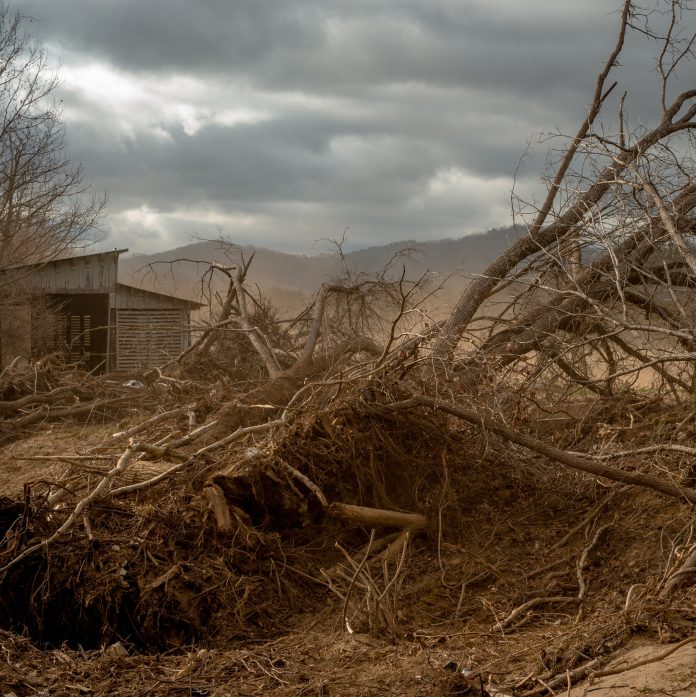
And in Helene-ravaged western North Carolina, tiny Warren Wilson College, a liberal arts school that specializes in environmental and climate science, has been hoping to hear in recent weeks about an application for aid to repair damaged roofs and clear debris from research fields, but has heard nothing.
“There’s a deep sadness when walking through all that debris, knowing all that was lost,” said Rosemary Thurber, a 22-year-old student at the college whose studies have been disrupted. She said that she and her fellow students were “losing faith in our federal government.”
The funding freeze illustrates the extraordinary power of Mr. Musk, the world’s wealthiest man, who has increasingly pointed his Department of Government Efficiency at exposing funding that benefits undocumented immigrants and whose demands regularly prompt responses from senior government officials.
In this case, Mr. Musk’s 5:03 a.m. post on X, the social media platform he owns, was followed hours later by a memo from Cameron Hamilton, the acting head of FEMA, saying the agency had stopped payments under a variety of grant programs, and given DOGE “full system access to our financial management system.” Nine days later, Homeland Security Secretary Kristi Noem, whose agency includes FEMA, signed the first of two agency orders that took aim at migrant funding and effectively spread the freeze across almost all of the agency’s grants.
After The New York Times submitted a list of detailed questions about the freeze on Monday, Ms. Noem on Tuesday signed a memo authorizing agency staff to exempt certain grants from the immigration-related orders, according to a person briefed on the change. It is not clear when or how quickly FEMA will go about releasing the money, and the Department of Homeland Security did not respond to The Times’s questions.
A representative for the White House and DOGE did not respond to questions this week.
The FEMA press office said in a separate statement last week that it attributed to an unnamed homeland security official: “FEMA is taking swift action to ensure the alignment of its grant programs with President Trump and Secretary Noem’s direction that U.S. taxpayer dollars are being used wisely and for mission-critical efforts.”
The freeze has played out against the backdrop of widespread upheaval at the disaster relief agency, highlighted by Ms. Noem’s assertion during a Monday cabinet meeting that “We’re going to eliminate FEMA.”
Ms. Noem’s office has directed staff to develop a plan to disband the agency, according to a person familiar with internal deliberations who was not authorized to discuss the matter in public.
It is not clear what government agencies, if any, would take over FEMA’s role delivering aid to communities hit by disasters. Mr. Trump has mused about returning those duties to the states, or perhaps having the Defense Department carry more responsibility for responding to disasters.
In the short term, however, many communities that see FEMA grants as a lifeline are still waiting.
“There are projects beyond our ability to address on our own,” Damián J. Fernández, the president of Warren Wilson College, said earlier this month on a campus still covered in debris from the September storm, his voice breaking. “We have followed the rules. But the system is not working.”
One storm leads to another
FEMA’s existential crisis arguably began last fall, when Hurricane Helene killed more than 100 people in North Carolina and damaged more than 73,000 homes. The destruction was shocking, especially in a region not accustomed to hurricanes, and quickly became part of the presidential campaign.
Within a week of the hurricane reaching North Carolina, FEMA had provided more than $45 million in disaster relief and sent more than 1,500 personnel, according to the agency. But as survivors struggled to regain access to basic services, many concluded that FEMA was failing to do enough.
That message was amplified by Mr. Trump and Mr. Musk, who began criticizing FEMA for spending its money to house illegal immigrants rather than help hurricane survivors.
“Kamala spent all her FEMA money, billions of dollars, on housing for illegal migrants,” Mr. Trump claimed at a rally soon after the storm, referring to Kamala Harris, then the vice president and his rival in the presidential race.
Mr. Trump appeared to be referring to the Shelter and Services Program. Congress approved it under the Biden administration, directing FEMA to run a program for housing migrants who entered the United States and were released by federal officials.
Congress gave the program $650 million last year for cities, states and nonprofits, but Mr. Trump’s comments were inaccurate. FEMA’s spending on migrants does not mean FEMA has less money to spend on disaster survivors. The money for migrants comes from the budget of Customs and Border Protection, not out of FEMA’s budget. Money for disaster survivors comes directly from Congress. There is no overlap between those two funds.
Soon after his return to the White House, Mr. Trump made Mr. Hamilton acting FEMA director. A former Navy SEAL and congressional candidate who campaigned on an anti-illegal immigration message, Mr. Hamilton did not have experience running a state or local emergency management agency.
DOGE members arrived at the agency’s downtown Washington headquarters in early February to begin going through contract and grant payments.
Then came Mr. Musk’s post.
“The @DOGE team just discovered that FEMA sent $59M LAST WEEK to luxury hotels in New York City to house illegal migrants,” Mr. Musk wrote, exaggerating the quality of hotel rooms that were used. He added that FEMA had in his view violated an executive order from Mr. Trump, which ordered the agency to pause money supporting undocumented migrants. “A clawback demand will be made today to recoup those funds,” he wrote.
The Trump administration response was swift.
Ms. Noem accused “deep state activists” of going rogue and circumventing her leadership to “unilaterally” transfer money to the city in the first place. FEMA took the extraordinary step of abruptly clawing back $80 million in federal shelter funds from a New York City-owned bank account, including the $59 million Mr. Musk posted about, leading the city to sue the Trump administration. And Mr. Hamilton publicly pledged to punish anyone involved in the transfer of the money, leading FEMA to fire four people, including the agency’s chief financial officer, Mary Comans.
Privately, however, Mr. Hamilton offered a different account.
In his Feb. 10 memo, distributed after Mr. Musk’s post, he explained that a top homeland security official on Jan. 30 had given FEMA permission to keep making payments to state and local governments, which included funds for the migrant shelter program, according to a copy of the memo reviewed by The Times.
In that memo, which laid out the steps FEMA had taken to halt funding after the Musk post, Mr. Hamilton also wrote that the FEMA officials who had signed off on payments for the migrant program “believed they were acting in good faith and in line with intent and direction received” from D.H.S., President Trump and Mr. Musk’s DOGE team.
Mr. Hamilton did not respond to a request for comment.
Ms. Comans is now suing FEMA, claiming the agency made her the scapegoat for a policy that the agency reversed after Mr. Musk complained about it. “My client was actually following the directions of D.H.S./FEMA leadership,” said Mark S. Zaid, Ms. Comans’s lawyer.
But instead of backing off, Ms. Noem cracked down further. On Feb. 19, she issued a memo directing FEMA and other agencies within DHS to cut off funding for what she called “sanctuary jurisdictions” — cities or states that fail to help federal authorities track down, arrest or hold migrants. On Feb. 28, FEMA imposed a “manual review” on all grants, according to copies of the memos reviewed by The Times.
The result: a freeze on payments that FEMA owed beneficiaries on grants valued at more than $100 billion, many of which are designed to stretch across multiple years.
Real-world consequences
For some, the impact of the freeze has been profound.
French Broad Electric Membership Corporation, a small utility outside Asheville, N.C., spent about $18 million through the end of last year to pay workers and contractors for repairs to power lines, poles and wiring after Helene knocked out power to all of its 43,000 customers.
The co-op got approved for an expedited grant under FEMA’s public assistance program in early February, according to Jeff Loven, the co-op’s general manager and CEO. It was supposed to get $9 million by the middle of last month, he added, but was still waiting for the money as of Wednesday afternoon.
“We’ve had to borrow money on short-term lines of credit to be able to pay these folks, as well as the vendors who supplied these materials,” Mr. Loven said. If the freeze continues, he added, “we have to go borrow more money and get further in debt.” The interest on that line of credit is about $250,000 a month, Mr. Loven said, and that cost could end up falling on their customers unless the co-op gets the FEMA money soon.
In Florida, when Hurricane Ian struck Fort Myers in September 2022, it destroyed the rental house that Hayley Riotto was living in. Ms. Riotto, who was then a 22-year-old single mother, wound up living out of her car with her two children, who were three and four. At one point, she found a campground and told her children they were on an extended camping adventure.
Ms. Riotto eventually found her way to Compass 82, a nonprofit that connects survivors with charities and government services. The group helped her secure a deposit for a new rental home, as well as beds, dressers and a table to put in it, and clothing for her and her children. Once Ms. Riotto had a home again, she was able to get a job. “My kids are just flourishing,” she said.
Compass 82 has about 50 case managers who are working with more than 750 hurricane survivors around Florida, according to Susan Marticek, the group’s executive director. But that work is funded by FEMA.
On Wednesday, the group got a small payment, possibly a sign of the freeze being lifted. But Ms. Marticek said she is still waiting on about $1.3 million in reimbursements, for work done in November, December and January. Without that money, she said she expects she’ll need to start laying off staff in two or three months — just as hurricane season starts.
Pacific Gateway Center, a nonprofit in Hawaii that helps survivors of the 2023 Lahaina wildfire get back on their feet, last got money from FEMA in December, according to its executive director, Matthew Johnson. He had expected additional reimbursements to come early this year, but as of Wednesday that money had not yet arrived. He estimated that his group can hold out for maybe one or two months before it starts cutting case workers.
FEMA’s grants also pay part of the budgets for state and local emergency management agencies, the same offices that Mr. Trump has said he wants to shoulder more of the burden for responding to future disasters.
Michigan’s state emergency management agency was waiting on $112 million in funds, according to Lauren Thompson, a spokeswoman for the agency. Maryland’s emergency management department was waiting for $81 million in frozen FEMA grants as of Wednesday, according to Jorge Castillo, a spokesman.
At Warren Wilson College, staff got a call from FEMA in mid-March, two months after filing their application. Those “expedited” applications are usually processed within 30 days, according to Christian Montz, vice president of emergency management at High Street Consulting, a group that helped the college work with FEMA.
But FEMA wasn’t calling to say the grant had been approved. Rather, an agency representative said FEMA had missed its internal deadline for processing the application. The college would need to file it again.
Officials within FEMA who consider grant applications have been reluctant to issue approvals since Mr. Musk’s Feb. 10 post about migrants and Ms. Comans’s firing, for fear of being punished by the agency’s leadership, according to three people inside FEMA who spoke on the condition of anonymity to discuss internal dynamics.
While the college waits, its research fields are still unusable, causing much of Rosemary Thurber’s studies to be disrupted. Outdoor classrooms near the river trail remain covered with debris that seemed to come from someone’s kitchen, mixed with washed-up toys and shoes.
“I really look forward to times when we can be growing food out there again,” she said.
River Akira DavisEmiliano Rodríguez Mega and Ian Austen
River Akira Davis reported from Tokyo, Emiliano Rodríguez Mega from Mexico City and Ian Austen from Ottawa.
Mexico deployed thousands of National Guard troops to the border to deter migrants from reaching the United States. South Korea said it would invest $21 billion in expanding U.S. manufacturing. Japanese officials descended on Washington, offering to invest $1 trillion in the United States and buy more American natural gas.
None of that was enough to prevent one of those countries’ biggest tariff concerns from becoming a reality on Wednesday, when President Trump declared that automobiles and car parts imported to the United States would face a 25 percent tariff starting on April 3.
Mexico, Japan and South Korea, along with Canada, account for about 75 percent of U.S. vehicle imports. Beyond direct exports, Japanese and South Korean automakers also manufacture many of the vehicles in Mexico and Canada that ultimately land in the American market, leaving them particularly exposed to the tariffs.
The tariffs will also hit Europe, particularly Germany, whose three largest carmakers make up nearly three-quarters of the European Union’s automotive exports to the United States.
In the near term, Mr. Trump’s new tariffs are expected to scramble foreign automakers’ production operations and drag on their earnings.
Shares in Japan’s Toyota Motor, Honda Motor and Nissan Motor all fell about 2 percent in Asia trading on Thursday. The stock prices of South Korea’s Hyundai Motor and Kia, as well as Mazda Motor and Subaru — two smaller Japanese manufacturers particularly dependent on U.S. sales — fell between 3 and 6 percent.
Shares in Germany’s Volkswagen, Europe’s largest automaker, fell 1.5 percent. Other German carmakers like Mercedes-Benz and BMW dropped 2 to 3 percent inEuropean trading.
However, if the tariffs are prolonged — or even permanent, as Mr. Trump has said they will be — they will likely have far-reaching and damaging effects on the economies of the United States’ North American neighbors and key allies in Europe and Asia.
For Japan and South Korea, automobiles are the top export to the United States. Mexico, in addition to cars, produces tens of billions of dollars worth of automobile parts each year that are exported to its northern neighbor. In Canada, auto manufacturing and auto parts are the country’s second-biggest export by value. Last year, European automakers’ shipments across the Atlantic were worth more than $40 billion.
For countries heavily affected by Mr. Trump’s tariffs, economists warned that the new taxes on cars could significantly curb economic growth this year. In the longer term, the tariffs could prompt a carving out of domestic production in countries where the industrial base is heavily reliant on automakers and their supply chains.
In recent years, Japanese and South Korean automakers, as well as European brands — which account for 18 percent of U.S. car imports — have become increasingly reliant on the American market. That is in part because of stagnant demand in their home countries, but also because they are facing heightened competition from local competitors in the world’s biggest car market, China.
This dynamic helps to explain why some of the countries fought intensely to try to secure exemptions from the tariffs.
Japanese officials and lobbyists have argued their case in Washington, highlighting substantial Japanese investment in the United States and warning that tariffs would raise prices for American consumers. In a meeting with Mr. Trump last month, Japanese Prime Minister Shigeru Ishiba said Japan would aim to increase investment in the United States to about $1 trillion by buying more products like American liquefied natural gas.
In Mexico, officials deployed about 10,000 National Guard troops to the U.S.-Mexico border in response to Mr. Trump’s persistent condemnation of illegal migration to the United States. They also handed over to the United States dozens of top cartel operatives and worked to crack down on fentanyl production.
Hyundai in South Korea said earlier this week it would invest $21 billion in expanding U.S. manufacturing. After Mr. Trump praised the announcement as a sign that his policies were working to create more American jobs, many in the industry were looking to see if Hyundai’s pledge would sway the president’s tariff calculus.
It apparently didn’t.
Peter Navarro, the senior counselor to the president on trade and manufacturing, singled out Japan, South Korea and Germany, when speaking to reporters on Wednesday. Those countries, he said, had undermined the ability of U.S. companies to sell their cars overseas.
Japanese brands shipped 1.37 million vehicles to the United States last year, while South Korean automakers exported 1.43 million. In addition, 821,000 light vehicles sold in the United States last year were assembled in the European Union, according to JATO, a research firm. Conversely, U.S. automakers have a minimal presence in Japan, South Korea and Germany — a reality that has vexed Mr. Trump since his first term as president.
Still, foreign officials, who felt they were willing to negotiate with the Trump administration, were stunned by the Wednesday announcement.
“Japan has made significant investments in America and created a significant number of jobs. We do not do this for all countries,” Japan’s prime minister, Shigeru Ishiba, said during a meeting at Parliament. Mr. Ishiba said he was “strongly requesting” that the 25 percent tariff on automobile imports not be applied to Japan.
While Canadian officials have been in close touch with their American counterparts since Mr. Trump’s election in November, Canada was given no advance warning or details of the president’s announcement. “This is a direct attack,” Mark Carney, the Canadian prime minister, said at a campaign stop.
In Mexico, Francisco González, the executive director of the country’s National Auto Parts Industry Association, said that he was “shocked” by the tariff announcement. Earlier this week, the incoming U.S. ambassador to Mexico, Ronald Johnson, had told Mr. Trump he was “encouraged” by the increase in support he had seen from the Mexican government.
Ursula von der Leyen, the president of the European Commission, said that the bloc would continue to try to negotiate with the Trump administration “while safeguarding its economic interests.”
The organization that represents German automakers said the tariffs would be “a dire signal for free and rule-based trade” that will have “negative consequences especially for consumers, including in North America.”
For now, companies and officials are left to consider their options and come up with new plans.
In Canada, Mr. Carney had promised help for workers and auto-related industries if Mr. Trump did, in fact, go ahead with tariffs, including a 2 billion Canadian dollar ($1.4 billion) fund to reshape the sector for a future without the United States.
A number of car companies in Asia have been trying to accelerate shipments to the United States before the tariffs Mr. Trump was threatening would take effect. Those automakers are also beginning preparations to ramp up production to the extent they can at the manufacturing plants they operate inside the United States.
However, Michael Robinet, a vice president at the automotive intelligence provider S&P Global Mobility, said that few automakers outside of America’s big three brands — General Motors, Ford Motor and Stellantis — have excess production capacity in the United States. That means that if they want to make more vehicles, they would have to build new factories, which would take years to complete.
For now, Mr. Robinet said, the tariffs would mean chaos for automakers and higher prices for consumers in the United States.
“There’s a belief from some in the government that automakers will simply absorb the added costs,” Mr. Robinet said. However, automakers’ margins are ill-equipped to handle that burden, he said. “Vehicle prices will go up without doubt,” he said, “it’s just a matter of how and when and how much.”
Jack Ewing and Eshe Nelson contributed reporting.
Advertisement


Damien Cave and Steven Erlanger
Damien Cave often covers global affairs. He is based in Vietnam. Steven Erlanger has been covering European diplomacy and trade for decades, and is based in Berlin.
News Analysis
President Trump’s unexpected plan to impose a 25 percent tariff on cars and car parts imported into the United States will not only disrupt supply chains. It will also fuel anger and alienation — and pressure to retaliate — among American allies across the globe.
Many of the countries most affected by the new levies, such as South Korea, Japan, Germany, Mexico and Canada, are already reeling from the Trump team’s disregard for free trade deals already signed and his threats to long-established security relationships.
Prime Minister Mark Carney of Canada said on Wednesday that Trump’s move on tariffs was “a direct attack.” Ursula von der Leyen, president of the European Commission, said the result would be “bad for businesses” and “worse for consumers.” Robert Habeck, Germany’s acting economics minister, said, “It is now important for the E.U. to respond decisively to the tariffs — it must be clear that we will not back down in the face of the U.S.”
Other leaders reacted in muted terms, hinting that they were still considering how to respond, with another round of tariffs, in addition to this one, expected in early April.
“We need to consider what’s best for Japan’s national interest,” Prime Minister Shigeru Ishiba of Japan told Parliament on Thursday. “We’re putting all options on the table in considering the most effective response.”
The tariffs, which threaten both American and foreign carmakers, increase the likelihood of a global trade war. A chain reaction of economic nationalism with tariffs and other measures — perhaps adding costs for finance and services — could suppress economic growth globally, spread inflation and add rancor to already testy negotiations with Washington about security.
The Trump White House has sought to use every tool of American power, including its military support and consumer market, to extract what Mr. Trump sees as a better deal for Americans. But for countries that have spent decades trusting America and tying their economies and defense plans to Washington’s promises, this feels like a moment of reversal.
American influence, long built on pronouncements about values and the shared riches of free trade, has hardened into what many analysts describe as “all stick, no carrot.” In the Trump team’s thinking, critics argue, American gains require pain for others — friends included.
“Everything is a status competition or a dominance competition,” said Andrew Kydd, a political scientist at the University of Wisconsin who incorporates psychology into studies of international relations. “I think this is characteristic of extremists of all stripes — everything is about exploitation and domination, and to think otherwise is to be blind or naïve.”
As a result, he added, other countries “have to take seriously the articulated goals, however alarming.” That includes threats to seize Canada, Greenland and the Panama Canal, plus demands for economic submission to tariffs that weaken the economies of allies.
The European Union, which governs trade policies for its 27 member states, has been working for months on proposals for counter-tariffs if necessary. Those are designed to target areas of the United States that supported Mr. Trump in the last election. The United States is the E.U.’s largest trade partner, with nearly a trillion dollars of two-way trade last year, so new tariffs and counter-tariffs will have a dramatic impact on both sides, and sharply increase market uncertainty.
European Union officials have already announced plans to place new tariffs on many American goods — from lingerie to soy products — by mid-April, while lifting suspension of previous countermeasures imposed on earlier tariff fights over steel and aluminum.
That first wave, meant to hit American whiskey and motorcycles, was delayed to allow for more negotiations and over fears of a stark American response that could crush European wine and Champagne exports.
More potent measures are now likely to follow.
Ms. von der Leyen said late Wednesday that the European Union would “continue to seek negotiated solutions, while safeguarding its economic interests.”
European countries, especially Germany, export many more cars to the United States than they import. Anger about this disparity has been a regular theme for Mr. Trump since the 1980s, long before he went into politics, when he often complained about the numbers of German and Japanese cars on American streets.
The United States is the most important export market for Germany’s auto industry, and the largest three German carmakers make up about 73 percent of the European Union’s automotive exports to the United States.
Armin Laschet, a conservative who may become Germany’s next foreign minister, said a robust response to the tariffs must come from the European Union.
Canadian officials — with an election weeks away — have issued a similar call for action. On Wednesday, Mr. Carney’s campaign brought him to the bridge at the border with Detroit over which $300 million worth of auto parts cross daily. He unveiled a series of promises for the auto industry including a two billion Canadian dollar ($1.4 billion) fund to reshape it for a future without the United States.
“We will defend our workers, we will defend our companies, we will defend our country, and we will defend it together,” he said.
In Asia, officials had hoped for softer tariff treatment based on factories already being built in the United States at great expense. “We invest in America, employ people, and pay the highest wages,” Mr. Ishiba, the Japanese prime minister, said.
And yet, at a moment when economic and military threats seem to be converging for Japan, analysts said his hands were tied: Because inflation is rising with a weakened Japanese yen, Japan cannot afford a trade spat that drives up consumer prices even further. And with a more militarized China on Japan’s doorstep, sending armed ships to assert its claims to disputed islands in recent days, the prime minister is most keen to get a clear commitment from Mr. Trump to defend Japan’s security. Defense Secretary Pete Hegseth is scheduled to arrive in Tokyo this week.
So far, the Trump administration has sent conflicting signals to America’s largest Asian ally. While Secretary of State Marco Rubio has reaffirmed support for Japan, the president himself has publicly questioned the two nations’ security alliance.
“We are very much constrained at this moment,” said Ken Jimbo, a professor of international politics and security at Keio University.
South Korea finds itself in a similar position; it has deepened its diplomatic and military dependence on the United States in recent years, as anti-Chinese sentiment rose among its people, and to strengthen deterrence against North Korea.
South Koreans’ fundamental trust in the alliance will survive the latest tariffs, in part because the penalties didn’t target South Korea only but also hit competitors, said Park Won-gon, an expert in South Korea-U.S. relations at Ewha Womans University in Seoul.
But cars are one of South Korea’s biggest export items, totaling $71 billion last year, and the United States was the destination for nearly half. The government called for a meeting with the car industry on Thursday to discuss a response to the tariffs.
“The U.S. tariffs are expected to pose significant challenges for our automobile companies exporting a large volume to the U.S. market,” said Ahn Duk-geun, South Korea’s trade minister.
On news portals from the left and right, many Koreans expressed outrage that the tariffs were landing just a few days after Hyundai Motor, a South Korean conglomerate, said it would invest $21 billion to expand manufacturing in the United States.
William Choong, a senior fellow at the ISEAS – Yusof Ishak Institute in Singapore, said that for many Asian allies, it feels as if the United States is a police commander “that sticks his Glock down the back of the junior cop — i.e. regional countries — and starts shaking him down for cash and other valuables.”
Ian Austen contributed reporting from Windsor, Ontario; Choe Sang-Hun from Seoul; Martin Fackler from Tokyo; Emiliano Rodríguez Mega from Mexico City, Mexico; Jeanna Smialek from Brussels; and Melissa Eddy and Christopher F. Schuetze from Berlin.

President Trump said in a middle-of-the-night social media post early Thursday that he would come after the European Union and Canada if they banded together to “do economic harm” to America, opening a new front in the unfolding trade war.
“If the European Union works with Canada in order to do economic harm to the USA, large scale Tariffs, far larger than currently planned, will be placed on them both in order to protect the best friend that each of those two countries has ever had!” Mr. Trump wrote.
Mr. Trump’s post creates a new problem for the European Union, which is already trying to respond to his tariffs on steel, aluminum, autos and potentially a broader array of goods and services.
The United States is by far Europe’s most important trading partner, and the prospect of worse trading conditions has left the European Union scrambling to negotiate. But the Trump administration has showed little appetite to strike a deal so far.
“In the end, as it is said, one hand cannot clap,” Maros Sefcovic, the trade commissioner for the European Union, has said.
That has left Europeans seeking to strike new alliances and deepen existing trading relationships. And concerns about President Trump’s shifting stance on military support have driven partners like the European Union and Canada closer together. Canada is already working toward providing industrial support for Europe’s rearmament push.
European Commission officials did not immediately comment on Mr. Trump’s post.
Advertisement

It was a hoax. The information wasn’t classified. Somehow the journalist got “sucked into” the Signal chat, either deliberately or through some kind of technical glitch.
In the days since the editor in chief of The Atlantic revealed he had been inadvertently included in a group chat of top U.S. officials planning a military strike on Houthi militants in Yemen, senior members of the Trump administration have offered a series of shifting, sometimes contradictory and often implausible explanations for how the episode occurred — and why, they say, it just wasn’t that big a deal.
Taken together, the statements for the most part sidestep or seek to divert attention from the fundamental fact of what happened: Defense Secretary Pete Hegseth used Signal, an unclassified commercial app, to share sensitive details about an imminent attack in an extraordinary breach of national security.
Here’s a look at the main players and what they’ve said about what happened, and how much their reasoning matches up with what transpired.
President Trump said the Atlantic’s article was a “witch hunt” and called the journalist a “total sleazebag.”
President Trump told reporters on Wednesday that the fervor over the Atlantic’s article was “all a witch hunt,” suggesting that perhaps Signal was faulty, and blaming former President Joseph R. Biden Jr. for not having carried out the strike on Yemen during his administration.
“I think Signal could be defective, to be honest with you,” he said, after complaining that “Joe Biden should have done this attack on Yemen.” The fact that he didn’t, Mr. Trump added, had “caused this world a lot of damage and a lot of problems.” While the Trump administration has criticized Mr. Biden for not being aggressive enough against the Houthis, his administration led allied nations in several attacks on Houthi sites in Yemen in 2024.
Mr. Trump has insisted that no classified information was shared among the members of the group, including the editor of The Atlantic, Jeffrey Goldberg — and that it wasn’t uncommon for members of the government to use Signal for official business.
But he has also spent a lot more energy disparaging Mr. Goldberg and The Atlantic than defending his national security officials.
“I happen to know the guy is a total sleazebag,” Mr. Trump said of Mr. Goldberg on Tuesday, speaking to reporters from the Cabinet Room. He added: “The Atlantic is a failed magazine, does very, very poorly. Nobody gives a damn about it.”
The president and the secretary of defense have the ability to assert, even retroactively, that information is declassified. Former national security officials have said they were skeptical that the information shared by Mr. Hegseth ahead of the March 15 strike was not classified, given its specificity and the life-or-death ramifications.
Mr. Hegseth said the details he shared were not technically “war plans.”
“No names. No targets. No locations. No units. No routes. No sources. No methods. And no classified information,” Mr. Hegseth wrote Wednesday on X. He added: “We will continue to do our job, while the media does what it does best: peddle hoaxes.”
In seeking to discredit The Atlantic, the White House has insisted that the information shared on Signal was not a “war plan,” as the headline on the initial story called it, but an “attack plan.” National security experts say this is very likely a distinction without a difference.
According to the messages released by The Atlantic, Mr. Hegseth included time stamps and other secret details in his messages, hours before the attack began — all of which could have upended the strikes had they fallen into the wrong hands.
Michael Waltz, the national security adviser, suggested the journalist may have been ‘sucked into’ the group chat.
On Fox News, Mr. Waltz laid into Mr. Goldberg, calling him “scum” and suggesting that he might have intentionally managed to insert his number into Mr. Waltz’s phone.
Mr. Goldberg has said he was inadvertently added to the Signal group chat by Mr. Waltz.
Mr. Waltz said that he was “not a conspiracy theorist,” but that he was suspicious about how Mr. Goldberg “somehow gets on somebody’s contact and then gets sucked into this group.”
“Have you ever had somebody’s contact that shows their name and then you have somebody else’s number there?” Mr. Waltz added, noting that “it looked like someone else.” He also said “we’re trying to figure out” whether the journalist was added to the group deliberately or through “some other technical mean.”
The host, Laura Ingraham, seemed confused by his responses, asking him if a staff member might have made such an error. Mr. Trump told NBC News on Tuesday that “it was one of Michael’s people on the phone.A staffer had his number on there.”
On Fox, Mr. Waltz insisted that “a staffer wasn’t responsible.”
“Look, I take full responsibility, I built the group,” he said, while also insisting he had never texted Mr. Goldberg and that he wasn’t on his phone at the time of the chat. He said that Elon Musk, the tech billionaire who is a Trump adviser, had some of “the best technical minds” looking into what might have happened.
Tulsi Gabbard, the spy chief, said she wasn’t really involved.
Ms. Gabbard told members of Congress on Wednesday that the messages proved she wasn’t involved in sharing or discussing any of the details related to the strike.
“What was shared today reflects the fact that I was not directly involved with that part of the Signal chat” she said in testimony before the House Intelligence Committee.
According to the messages published in The Atlantic, Ms. Gabbard weighed in early in the exchange to name Joe Kent, who has been a top aide to Ms. Gabbard as he awaits Senate confirmation to lead the National Counterterrorism Center, as her representative to coordinate meetings. She did not text again until the end of the chat, writing “Great work and effects!” following the strike.
John Ratcliffe, the C.I.A. director, insisted he personally did nothing wrong.
Mr. Ratcliffe defended his actions on Wednesday while expressing indignation at how The Atlantic had characterized certain information he had posted to the Signal group.
“Those messages were revealed today and revealed that I did not transmit classified information,” Mr. Ratcliffe told members of the House Intelligence Committee. He accused Mr. Goldberg of having misrepresented a detail from his contributions to the exchange.
Mr. Goldberg, he said, “indicated that I had released the name of an undercover C.I.A. operative in that Signal chat. In fact, I had released the name of my chief of staff, who is not operating undercover.”
“That was deliberately false and misleading,” Mr. Ratcliffe concluded.
In the original article, Mr. Goldberg did not refer to that person as an undercover operative, but as an “active intelligence officer.” In the second article, in which he published the Signal group’s messages, he said the C.I.A. requested that Mr. Goldberg not publish his name, so he did not. The C.I.A. likes to keep its officers’ names secret so they can still take future assignments overseas.
Steve Witkoff, Mr. Trump’s special envoy to the Middle East, said he didn’t have his phone on him as the plans were under discussion.
Mr. Witkoff’s only contribution to the Signal chat was one message that he sent after the strike. It was just five emojis: two prayer hands, one muscle, and two American flags.
The Wall Street Journal’s editorial board on Tuesday wrote that Mr. Witkoff had been in Russia at the time that plans to strike Yemen were being discussed on the Signal group.
Mr. Witkoff acknowledged that he was visiting Moscow at the time, but in a post on social media denied that he had his phone with him, saying he only had “a secure phone provided by the government for special circumstances when you travel to regions where you do not want your devices compromised.”
Secretary of State Marco Rubio said the incident was a “big mistake” and suggested it could inspire reforms.
Mr. Rubio said it was obvious that someone had made a “big mistake” by including a journalist in the Signal group.
“Someone made a big mistake and added a journalist. Nothing against journalists, but you ain’t supposed to be on that thing,” Mr. Rubio told reporters while traveling in Jamaica.
“I think there will be reforms and changes made” as a result of the mistake, he added.
But otherwise, he echoed the argument voiced by others in the administration that because no war plans had been disclosed in the Signal group, the concerns were being overblown.
“There were no war plans on there,” Mr. Rubio told reporters. He said the chat was intended to keep Trump’s aides informed of the operations so they could talk with their counterparts in other countries about the strikes.
Edward Wong contributed reporting.

A federal judge in Maryland on Wednesday extended a temporary pause in the Trump administration’s efforts to fire probationary workers at more than a dozen federal agencies by five days.
The judge, James K. Bredar of the Federal District Court in Maryland, said he needed more time to determine whether a longer-term halt to the government’s firing of probationary employees should apply to the entire country or be restricted to certain states while the case proceeds.
Nineteen states and the District of Columbia sued the federal government, arguing they were irreparably harmed when the government fired thousands of probationary employees en masse in February, leaving states to face unemployment spikes without warning. Judge Bredar’s order earlier this month called for the workers’ reinstatement.
During a hearing on Wednesday, Judge Bredar said he was wary of issuing a longer halt to the government’s firings that would apply to the entire country when 31 states have decided not to participate in the case. He cited recent criticism that district courts had exceeded their authority in ordering nationwide halts to Trump administration programs. Of the lawsuit’s plaintiffs, all of the attorneys general are Democrats.
Lawyers for the states and Washington, D.C., say that when the administration conducts mass firings, as it did in February, the harm can spill over to other states, even if they are not joining this lawsuit. This is why a preliminary injunction needs to apply to more than just the participants, one of the lawyers, Virginia Anne Williamson with the Maryland Attorney General’s Office, said on Wednesday.
For example, if a preliminary injunction were restricted to the states that brought the lawsuit, the federal government could resume firing probationary employees in Virginia, which is not part of the suit. But in the case of an employee who works in Virginia and lives in Maryland, which is a party in the lawsuit, Maryland suffers from the firings, the suit argues, because it could have to provide support services for its unemployed resident.
“This is murky,” Judge Bredar said on Wednesday, adding that the court “has to wade into the swamp here and figure out if it can’t draft something more restrictive than across the country.”
Judge Bredar’s reinstatement order, issued on March 13, overlaps with court-mandated reinstatements of probationary employees in two other cases.
Many of the agencies have reinstated employees and issued back pay for the time between their firings and the court orders. Most agencies are placing the reinstated employees on administrative leave, which the Trump administration has told the court is part of the process of returning them to their jobs.
The Department of Housing and Urban Development, however, is not providing back pay to the fired workers, said Ashaki Robinson, president of the local American Federation of Government Employees union representing workers at that agency. Ms. Robinson said that could change if Judge Bredar made back pay part of a future order.