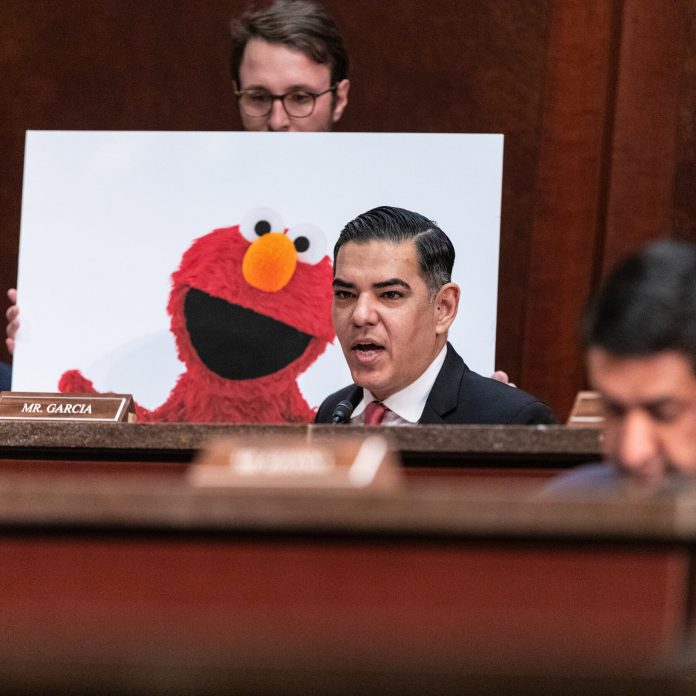

Cutting funding from the Corporation for Public Broadcasting could be catastrophic for local stations, particularly those in rural areas.
More than a half-century ago, the federal government took a big step toward the media business when President Lyndon Johnson signed the Public Broadcasting Act into law.
Because of that bill, PBS, NPR and other public broadcasters in the United States have received more than $500 million annually from the government-funded Corporation for Public Broadcasting.
That support now appears to be over. The Senate voted early on Thursday to strip the funding for the Corporation for Public Broadcasting. The House is expected to give final approval to the cuts later this week, sending it to President Trump, who has strongly pushed for the cuts, for his signature. The change could be catastrophic for radio and TV stations across the country.
Here’s what you need to know.
Will NPR and PBS survive?
Yes. NPR gets about 2 percent of its annual budget directly from federal grants, including from the Corporation for Public Broadcasting; for PBS, that amount is about 15 percent. Both organizations also get federal money indirectly, through payments from member stations across the country that receive government funding, though it’s difficult to estimate how much.
The real pain will be felt by local stations in far-flung locations like Unalakleet, Alaska, and Pendleton, Ore. Those broadcasters often rely disproportionately on federal grants for their operations because of a funding formula that takes into account the fact that they have fewer donors and programming sponsors.
What about local stations?
An internal NPR report from 2011 obtained by The New York Times said that if Congress cut off funding to the public radio system, up to 18 percent of the roughly 1,000 member stations would close, with broadcasters in the Midwest, South and the West affected the most. Nationwide, up to 30 percent of listeners would lose access to NPR programming.