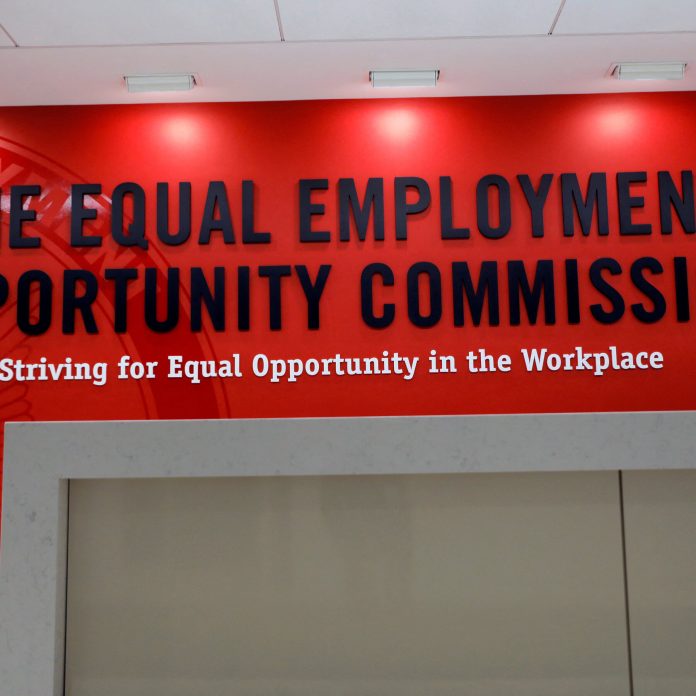

The E.E.O.C. said it would stop paying state and local civil rights agencies for claims from transgender employees or those based on “disparate impact.”
The Trump administration is making it harder for state and local agencies to enforce certain workplace discrimination laws, another step in its efforts to strip away longstanding civil rights protections for minority groups.
The Equal Employment Opportunity Commission, the nation’s primary regulator of workplace discrimination, pays state and local civil rights agencies to process and investigate many discrimination claims under work-sharing agreements.
But in a memo sent to those agencies last week, the E.E.O.C. said it would stop paying them for claims involving transgender workers or those based on what is known as disparate impact, which relies on statistical outcomes to prove discrimination. The memo, which was viewed by The New York Times, said the policy was retroactive to Jan. 20, when Mr. Trump took office.
That loss of federal resources will make it harder for state and local agencies to investigate these claims. Legal experts say the policy is likely to be challenged in courts and fits into the Trump administration’s efforts to chip away at civil rights law.
“They are consistently eroding the protections from the 1964 Civil Rights Act and other foundational civil rights laws in this country, and undermining the rights of particular communities,” said Maya Raghu, a director at the Lawyers’ Committee for Civil Rights Under Law, an advocacy group.
The E.E.O.C. declined to comment on the memo, which was dated May 20.
While presidents do not have the authority to unilaterally change civil rights laws, the Trump administration has used executive orders to chart a new path on enforcement. The memo said the directive to state and local agencies was consistent with two of Mr. Trump’s executive orders — one that asserted that the federal government recognizes only two sexes, male and female; and another that ordered federal agencies to halt their use of “disparate-impact liability.”